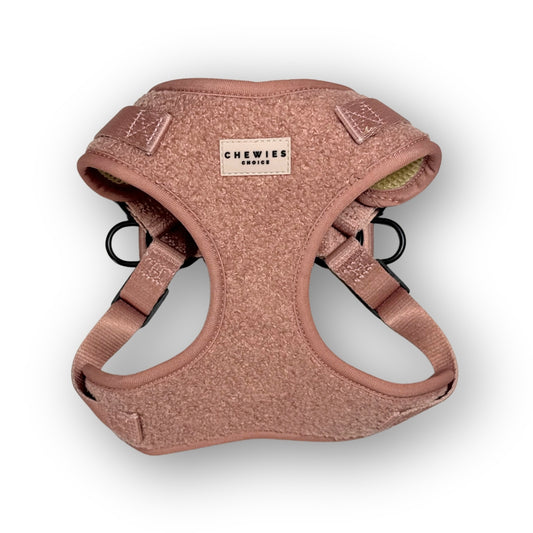
Small dogs often have slightly different needs when it comes to a good harness. A harness that's too heavy, too stiff, or ill-fitting can quickly become uncomfortable for a small dog.
In this guide, we explain what the best dog harness is for small dogs , what to look for when choosing a harness, and how to ensure a perfect fit.
Why a harness is better for small dogs
For many small dog breeds, a harness is often a better choice than a collar.
A collar can put pressure on the neck, especially in dogs that pull enthusiastically while walking. A harness distributes the pressure better across the body, making it more comfortable and safer.
Benefits of a dog harness for small dogs:
-
less pressure on the neck
-
more control while walking
-
more comfortable fit
-
safer for active or curious dogs
What should a good harness for small dogs meet?
Not every harness is suitable for a small breed. Pay particular attention to the following points.
Lightweight material
Small dogs have a lighter build. A heavy harness can feel uncomfortable and restrict movement.
Materials such as polyester webbing and neoprene with soft lining are ideal because they are light and flexible.
Good fit
A harness should fit properly without being too tight.
Always check:
-
bust size
-
neck size
-
adjustable straps
A good rule of thumb is that you should have about two fingers of space between the harness and your dog's body.
Soft lining
Small dogs often have more sensitive skin. A soft lining, such as mesh or neoprene, helps prevent chafing.
This is especially important on longer walks.
Strong closures
Safety is important even for small dogs.
Choose a harness with:
-
sturdy click buckles
-
strong D-ring for the line
-
sustainable stitching
Popular types of harnesses for small dogs
There are different types of dog harnesses. These are the most popular models for small breeds.
Y-harness
A Y-harness follows the natural shape of the body and gives a lot of freedom of movement.
Advantages:
-
ergonomic design
-
comfortable for longer walks
-
good pressure distribution
Step-in harness
With a step-in harness, your dog steps into the harness with its front paws. This is helpful for dogs who don't like having things pulled over their heads.
Advantages:
-
easy to put on
-
ideal for small and sensitive dogs
- Also available in Y-harness model
Side note: There are also harnesses on the market that have three buckles, so they don't have to be put on over the head. Because these harnesses have three buckles, they are often heavier than a so-called "step-in" harness. For small dog breeds, these types of harnesses are often too heavy and uncomfortable.
Best dog harness for small dog breeds
These breeds often benefit from a well-fitting, lightweight harness:
-
Chihuahua
-
Pomeranian
-
Toy Poodle
-
Maltese
-
Yorkshire Terrier
-
Miniature Dachshund
-
Shih Tzu
For these dogs, a lightweight, adjustable harness with soft padding is usually the best choice.
How do you measure a small dog for a harness?
The most important measurement for a harness is the chest circumference .
This is how you measure this:
-
Place a measuring tape around the fullest part of your chest
-
This is usually located just behind the front legs
-
Measure while your dog is standing upright
Note the size and compare it with the harness size chart.
A comfortable harness makes every walk more fun
The best harness for small dogs is lightweight, comfortable, and easily adjustable . By choosing the right size and style, your dog can enjoy a safe and relaxed adventure.
A good harness ensures that you can enjoy every walk together without any worries .
Still unsure about your size after measuring? Feel free to send us a message via chat, email , or a private message on Instagram.